
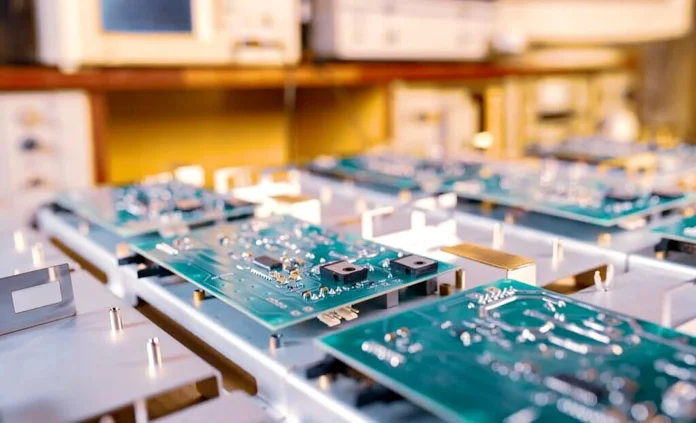

Engineering teams in the electronics industry operate under consistent pressure: accelerating product timelines, ensuring design accuracy, managing complex BOMs, and securing reliable manufacturing quality. Every stage of the development cycle presents potential risks—design errors, sourcing inconsistencies, assembly defects, or unexpected production failures. These risks directly affect product timelines, customer satisfaction, and long-term business performance.
This is why more OEMs are choosing turnkey pcb assembly services, which consolidate fabrication, sourcing, assembly, and testing into one integrated manufacturing ecosystem. By removing fragmentation from the production chain, turnkey PCBA significantly reduces engineering risk while improving speed, traceability, and overall reliability.
Below, we examine how turnkey PCBA acts as a risk-reduction engine for OEMs and why unified production is becoming the preferred approach for modern electronics design teams.
- Eliminating Multi-Vendor Failure Points
In traditional PCBA outsourcing, OEMs must manage communication across numerous vendors:
PCB fabricators
Component suppliers
SMT/THT assembly factories
Independent testing labs
Logistic and warehousing partners
Each vendor introduces uncertainty—different quality standards, varying documentation, inconsistent timelines, and potential miscommunication.
Common risks include:
PCB tolerances conflicting with assembly requirements
Inaccurate or outdated BOMs
Incorrect stencil or tooling design
Misaligned production timelines
Confusion during engineering change orders
solve these challenges by consolidating responsibility. A single partner oversees the entire workflow, eliminating handoff errors and significantly lowering system-level engineering risk.
- Integrated DFM/DFA Reviews Catch Problems Early
A large percentage of PCBA failures originate in the design stage—not during production. Many OEM teams unknowingly introduce manufacturability issues:
- Pad sizes that are incompatible with pick-and-place equipment
- Trace/via spacing issues
- Incorrect library footprints
- Unbalanced copper causing warpage
- Insufficient solder mask clearances
- Missing test points
- Component orientation errors
Traditional vendors may not proactively identify these problems, resulting in expensive redesigns or manufacturing failures.
A turnkey pcb assembly solution performs coordinated engineering reviews before production:
- DFM (Design for Manufacturability)
- DFA (Design for Assembly)
- DFT (Design for Testability)
- Stackup and impedance validation
- BOM risk analysis
By addressing issues early, OEMs eliminate preventable engineering risk and dramatically improve first-pass yield.
- Component Sourcing Control Prevents Material-Related Failures
Component variability is one of the biggest hidden risks in electronics manufacturing. OEMs often struggle with:
- Sourcing from multiple distributors
- Receiving components from anonymous suppliers
- Date-code variations
- Storage and moisture sensitivity problems
- Counterfeit or recycled parts
- Sudden shortages affecting production
A professional turnkey provider stabilizes BOM sourcing by offering:
- Procurement from authorized distributors
- Complete component traceability
- Compatibility checks between part alternatives
- Moisture-sensitive device (MSD) handling
- Cross-reference matching when parts are discontinued
- Inventory planning for large-scale builds
This ensures that the BOM remains consistent and reliable across all production phases, reducing sourcing-related engineering failures.
- Unified Process Parameters Reduce Assembly Risk
When fabrication and assembly are handled by different suppliers, assembly houses often receive boards with unknown:
Surface finish variations
Warpage tolerances
Solder mask thickness
Copper weight differences
Dimensional inconsistencies
Cleanliness or contamination levels
These inconsistencies create soldering problems, including bridging, head-in-pillow, insufficient wetting, tombstoning, and open joints.
A turnkey pcb assembly provider
ensures that fabrication inputs match assembly needs precisely. Parameters such as:
- Reflow oven profile
- Stencil thickness
- Paste type
- Panelization methods
- Fiducial design
- Oven zones and soak temperatures
are all tuned for the exact PCB being built. This drastically reduces assembly-stage risk.
- Enhanced Traceability Improves Failure Analysis
When issues occur in traditional PCBA workflows, OEMs face difficulty determining the root cause because different suppliers lack integrated traceability systems.
Turnkey PCBA reduces diagnostic risk because providers maintain:
- Complete lot traceability
- AOI and X-ray test logs
- Machine placement data
- Reflow profile history
- Incoming material inspection reports
- Fabrication batch documentation
When a defect arises, engineers can pinpoint the exact source immediately—saving time, preventing recurring issues, and improving yield for future builds.
- Faster ECO Implementation and Controlled Design Iteration
Engineering changes (ECOs) often introduce major risk when communicating across multiple suppliers. Different vendors may:
- Use outdated documents
- Miss updated Gerber files
- Ignore revised BOM details
- Misinterpret new assembly instructions
Turnkey PCBA solves this by maintaining a single document pipeline. Every ECO instantly updates across fabrication, sourcing, and assembly—not weeks later.
This eliminates design-change risk and ensures stable engineering iteration.
- Reduced Production Delays and Scheduling Risk
Traditional workflows frequently create hidden delays:
- PCBs arrive late from fabrication
- Components are out of stock
- Assembly houses reschedule production
- Test labs have throughput bottlenecks
Because turnkey providers plan the entire supply chain, they can mitigate:
- Lead-time risk
- Component shortage risk
- Production capacity risk
- Internal scheduling conflicts
For OEMs on aggressive deadlines, minimizing scheduling risk can be the difference between winning or losing a market opportunity.
- Why OEMs Select FastTurn PCB to Reduce Engineering Risk
is chosen by global OEMs for its engineering-driven turnkey PCBA ecosystem that focuses on minimizing risk at every production stage. FastTurn provides:
- Integrated fabrication + assembly quality systems
- Advanced SMT lines with IPC-certified processes
- BOM consistency and traceable sourcing
- Comprehensive DFM/DFA review
- Fast and accurate ECO implementation
- High-reliability testing and inspection
FastTurn gives OEMs confidence that their product will be built correctly, consistently, and safely—every time.
Conclusion
Engineering risk threatens product schedules, budget performance, and long-term product quality. The fragmented structure of traditional PCBA workflows increases these risks dramatically. By contrast, turnkey pcb assembly services offer a unified, stable, and engineering-focused manufacturing method that reduces uncertainty at every stage—from BOM validation to assembly to final testing.
For OEMs looking to minimize design failures, accelerate development, and maintain high reliability across production, turnkey PCBA is the most strategic and effective approach.