
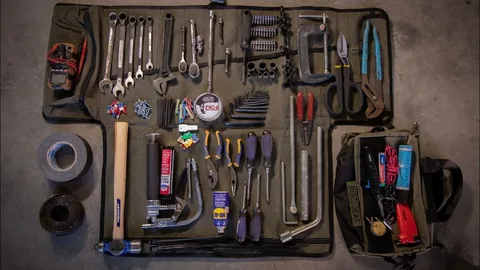

Taking care of your vehicle at home can save money, build confidence, and help you stay ahead of potential problems before they become costly repairs. While professional service is sometimes necessary, many routine maintenance tasks and minor fixes can be handled with the right tools and basic knowledge. From fluid checks to under-vehicle inspections, having dependable DIY tools makes home vehicle maintenance safer and more efficient. Even simple tools like a lock out kit can come in handy during unexpected situations, reinforcing the value of a well-rounded home garage setup.
Choosing the right equipment is just as important as knowing how to use it. Among the most essential tools for DIY maintenance are ramps and jacks, which provide access to areas otherwise difficult or unsafe to reach.
Ramps vs Jacks
Ramps and jacks both serve the purpose of lifting a vehicle, but they do so in different ways and are suited for different tasks. Understanding the strengths and limitations of each helps DIYers choose the safest and most effective option for the job at hand.
Car ramps are designed to elevate the front or rear of a vehicle by driving onto an inclined platform. Once positioned, ramps provide stable, hands-free access to the underside. This makes them ideal for routine maintenance tasks such as oil changes, exhaust inspections, and visual checks of suspension components. A solid set of car ramps offers excellent stability because the vehicle’s weight remains evenly distributed across all four tires.
One major advantage of ramps is simplicity. They don’t require lifting points, pumping mechanisms, or additional supports. For beginners, ramps often feel more intuitive and confidence-inspiring. They’re also quick to set up, which makes them convenient for frequent maintenance tasks.
However, ramps do have limitations. They only provide access to one end of the vehicle at a time and aren’t suitable for wheel removal or brake service. Vehicles with low ground clearance may also struggle to climb ramps without scraping, making ramps less practical for certain models.
Car jacks, on the other hand, lift vehicles by raising specific points off the ground. This makes them essential for tire changes, brake work, and suspension repairs. A quality car jack allows precise lifting, giving access to individual wheels or specific areas of the chassis.
Jacks offer versatility, but they require additional safety measures. Jack stands should always be used to support the vehicle once lifted, as jacks alone are not designed for long-term support. Proper placement and weight ratings are critical to avoid instability.
In short, ramps excel at stability and ease of use for routine maintenance, while jacks provide flexibility for more involved repairs. Many experienced DIYers keep both tools available to handle a wide range of tasks safely.
How To Use Ramps And Jacks For Home Repair
Using ramps and jacks correctly is essential for safe home vehicle maintenance. Preparation should always come first. Before lifting the vehicle, park on a flat, level surface and engage the parking brake. Wheel chocks should be placed behind the tires that remain on the ground to prevent movement.
When using ramps, alignment is key. Slowly drive the vehicle straight onto the ramp, ensuring both tires contact the ramp evenly. Once the tires are fully seated, shift into park or first gear and turn off the engine. Give the vehicle a gentle push to confirm stability before working underneath.
Ramps are best suited for tasks that don’t require wheel removal. Oil changes, transmission inspections, and visual checks of underbody components can all be performed efficiently while the vehicle rests securely on ramps.
Jacks require a more methodical approach. Always consult the vehicle’s owner manual to identify proper lift points. Position the jack squarely beneath the designated point and raise the vehicle slowly. Once lifted, immediately place jack stands under solid support points before lowering the vehicle onto them.
Never work under a vehicle supported only by a jack. Jack stands provide the stability needed to prevent sudden drops or shifts. Before beginning repairs, test stability by gently rocking the vehicle to ensure it’s firmly supported.
Combining ramps and jacks can be useful in certain situations, but only when done correctly. For example, ramps may support one end of the vehicle while jack stands secure the other, provided all lifting and support points are properly rated and positioned.
Regular inspection of lifting equipment is also important. Check ramps for cracks or warping and jacks for hydraulic leaks or mechanical wear. Maintaining your tools ensures they perform safely when you need them most.
Conclusion
DIY vehicle maintenance becomes safer and more efficient with the right tools and proper techniques. Ramps and jacks each offer unique advantages, and understanding when to use each helps prevent accidents and improves repair outcomes. Ramps provide quick, stable access for routine maintenance, while jacks deliver the flexibility needed for wheel and suspension work. By using lifting equipment correctly and prioritizing safety, home mechanics can confidently perform essential maintenance tasks and keep their vehicles running smoothly for years to come.