
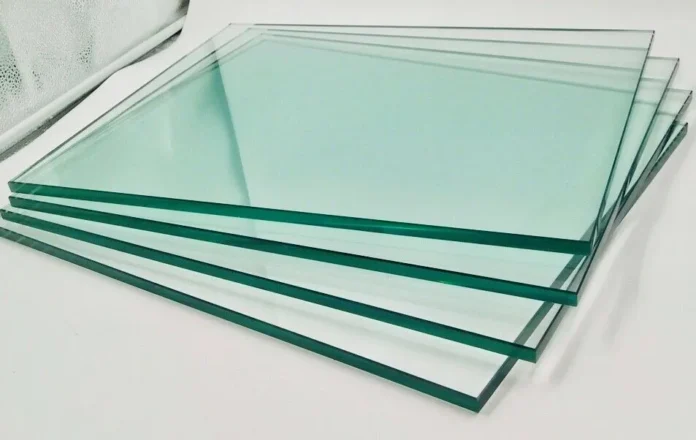

Tempered glass has become a staple in modern construction and product design, valued for its enhanced safety and strength. You see it everywhere, from your shower door and car windows to your smartphone screen protector. This widespread use often leads to the popular belief that it is an “unbreakable” material. But is this truly the case? While tempered glass manufacturers produce a remarkably resilient product, the term “unbreakable” might be more of a marketing concept than a scientific fact. To understand its true capabilities, we need to look closer at what tempered glass is, how it’s made, and where its limits lie.
What is Tempered Glass?
Tempered glass, also known as toughened glass, is a type of safety glass that has been processed by controlled thermal or chemical treatments to increase its strength compared with normal, or annealed, glass. This tempering process fundamentally changes the glass’s internal structure, making it about four to five times stronger than its untreated counterpart.
The key difference lies in how it responds to stress. While standard annealed glass shatters into large, jagged shards upon breaking, tempered glass is designed to crumble into small, granular, cube-like pieces. This unique breakage pattern significantly reduces the risk of serious injury, which is why it is classified as a safety glass and mandated for use in many applications.
The Science Behind the Strength: How It’s Made
The impressive strength of tempered glass is a direct result of its manufacturing process. The journey from a standard pane of glass to a tempered one involves a precise and carefully controlled heating and cooling cycle.
The Thermal Tempering Process
- Cutting and Finishing: The process begins with a piece of annealed glass. It is first cut to the desired size and shape. Any necessary drilling or edge finishing must be completed before tempering, as attempting to alter the glass after treatment will cause it to shatter.
- Inspection: The glass is thoroughly inspected for any imperfections, such as bubbles or cracks. Even a tiny flaw can become a weak point and cause the glass to break during the intense heating process.
- Heating: The glass is then moved into a tempering oven, where it is heated to a temperature of over 1,100 degrees Fahrenheit (approximately 600 degrees Celsius). The glass is passed through the oven on rollers, ensuring it is heated uniformly across its entire surface.
- Rapid Cooling (Quenching): Immediately after heating, the glass undergoes a high-pressure cooling procedure called “quenching.” During this stage, which lasts only a few seconds, high-pressure air jets blast the surface of the glass from multiple angles. This rapid cooling causes the outer surfaces of the glass to cool and solidify much faster than the center.
As the center of the glass continues to cool and contract, it pulls on the already rigid outer surfaces. This action creates a state of high compression on the exterior and tension in the interior core. This balanced internal stress is what gives tempered glass its remarkable strength and its unique breaking properties.
Applications: Where Strength and Safety Matter
The unique combination of strength and safety makes tempered glass an ideal material for a wide variety of applications. Its ability to withstand impact and its safe-fail nature are critical in many everyday environments.
Common Uses of Tempered Glass:
- Automotive: Side and rear windows of vehicles are made from tempered glass. In an accident, they crumble into small pieces to protect passengers from sharp shards. (Note: Windshields are typically made of laminated glass, another type of safety glass.)
- Architecture and Construction: You will find tempered glass in modern buildings used for balcony doors, large windows, skylights, and glass facades. It’s also used for frameless shower doors, glass partitions, and stair railings.
- Home Appliances: The glass shelves in your refrigerator and the door on your oven are often tempered to withstand temperature changes and potential impacts from pots and pans.
- Consumer Electronics: Many smartphones, tablets, and smartwatches use a form of chemically strengthened glass for their screens. Additionally, the screen protectors sold to protect these devices are typically made of tempered glass.
- Furniture: Tabletops, shelves, and cabinet doors are often crafted from tempered glass for durability and safety in a home or office environment.
So, Is It Truly Unbreakable?
The short answer is no. Tempered glass is not unbreakable; it is highly break-resistant. While it can withstand significant blunt force and direct impacts that would easily shatter standard glass, it has its vulnerabilities.
The strength of tempered glass comes from the high compression on its surface. As long as this compressive layer remains intact, the glass is incredibly strong. However, if an impact is sharp and deep enough to penetrate this outer layer and reach the tensile core, the stored energy is released catastrophically. This release is what causes the entire pane to shatter into its characteristic small, granular pieces.
This is why tempered glass is most vulnerable at its edges. A sharp impact directly on the edge of a tempered glass panel requires far less force to cause a break than an impact to its face. This is a crucial consideration during installation and handling.
Furthermore, while rare, tempered glass can sometimes shatter without any apparent impact. This phenomenon, known as “spontaneous breakage,” can be caused by minute imperfections in the glass, such as nickel sulfide inclusions, which can expand over time due to temperature fluctuations, eventually creating enough internal stress to cause the glass to fail.
Benefits vs. Limitations: A Balanced View
Tempered glass is an exceptional material, but it’s important to understand both its advantages and its weaknesses.
Benefits:
- Safety: Its primary benefit is its safe-fail nature, breaking into small, dull-edged pieces instead of dangerous shards.
- Strength: It is four to five times stronger than annealed glass of the same thickness, offering superior resistance to blunt impacts.
- Thermal Resistance: It can withstand higher temperature differentials than standard glass, making it suitable for applications like oven doors and some cookware.
Limitations:
- Not Unbreakable: It can break, especially from a sharp impact or a blow to its edge.
- Cannot Be Modified: Once tempered, the glass cannot be cut, drilled, or re-shaped. Any attempt will cause it to shatter.
- Spontaneous Breakage: Though infrequent, inherent flaws can cause it to break without any external force.
- Complete Failure: When it does break, the entire sheet shatters at once, leaving a completely open space, which may be a security concern in certain applications.
In conclusion, while tempered glass is not the indestructible material some might believe it to be, it is an engineering marvel that offers a powerful blend of strength and safety. It protects us in our cars, our homes, and even on the devices we carry in our pockets. By understanding its properties and limitations, we can appreciate it for what it is: a highly resilient, incredibly useful, and vitally important safety material.