
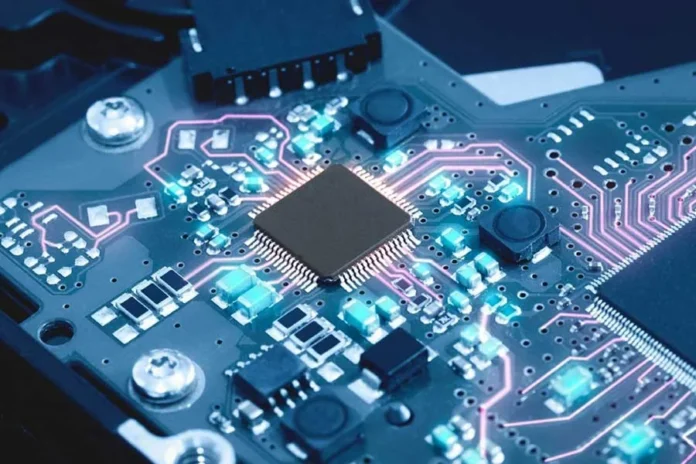

Hardware startups and small engineering teams face a unique set of challenges that significantly differ from those encountered by large, well-established OEMs. With limited manpower, tight budgets, compressed timelines, and pressure to prove product viability quickly, small teams must maximize efficiency across every stage of product development.
Yet many startups unknowingly slow themselves down by relying on traditional PCBA workflows—where PCB fabrication, component sourcing, assembly, and testing are handled by separate vendors. This fragmented approach introduces delays, miscommunication, and unpredictable quality that make it extremely difficult for small teams to move fast.
This is why more hardware startups now rely on a full turnkey PCB assembly service, which consolidates every manufacturing step into a unified, optimized workflow. Turnkey PCBA allows small teams to achieve rapid iteration, stable quality, predictable lead times, and dramatically reduced engineering workload.
This article explains in detail how full turnkey PCBA empowers small teams and why it has become one of the most important enablers for early-stage hardware success.
- Startups Must Move Fast—Turnkey PCBA Removes Workflow Bottlenecks
Speed is one of the most valuable currencies in the hardware startup world. Delays in prototyping or production validation can lead to:
- Missed investor deadlines
- Lost market windows
- Delayed certification
- Slower user testing feedback
- Increased development cost
Traditional multi-vendor PCBA introduces friction at every step:
- Waiting for PCB quotes
- Tracking components from multiple distributors
- Aligning shipping timelines
- Verifying BOM updates
- Repeating documentation for each supplier
Turnkey PCBA Accelerates the Entire Process
With full turnkey pcb assembly services
startups eliminate most of the operational overhead because fabrication, sourcing, and assembly are all managed through a single provider.
This means:
- Faster prototype turnaround
- Shorter engineering change cycles
- Fewer administrative tasks
- Immediate coordination between manufacturing stages
Startups gain time back—time that can be spent on firmware, testing, fundraising, and user research.
- Small Teams Need to Minimize Engineering Errors—Turnkey PCBA Provides Built-In DFM/DFA Support
Small hardware teams typically have 1–3 engineers who must handle:
- Electrical design
- PCB layout
- Firmware development
- Testing
- Documentation
- Supplier management
This increases the likelihood of overlooking manufacturability details during early design.
Common errors include:
- Incorrect footprints
- Missing test points
- Mismatched components
- Unbalanced copper
- Incorrect solder mask openings
- Poor tolerance alignment
Traditional PCBA workflows do not provide integrated engineering review.
Turnkey PCBA Solves This With Unified Engineering Feedback
A turnkey pcb assembly solution
provides:
- Comprehensive DFM checks
- DFA guidance
- DFT evaluation
- BOM validation
- Layout recommendations
This reduces prototype failure risk and ensures small teams avoid expensive redesign cycles.
- Component Sourcing Is a Massive Burden for Small Teams—Turnkey PCBA Removes It Completely
Sourcing components is one of the most time-consuming tasks for small teams. Startups often lack:
- Distributor relationships
- Negotiated pricing
- Priority allocation
- Ability to purchase small quantities
- Tools to predict component availability
- Processes to verify authenticity
This exposes startups to risks:
- Out-of-stock parts
- Long lead times
- Counterfeit components
- Wrong lifecycle parts
- MOQ problems
- Delivery delays
Turnkey PCBA Provides Stable, Traceable, Small-Batch-Friendly Sourcing
Turnkey providers offer:
- Real-time stock visibility
- Access to authorized distributors
- Full traceability
- Cross-reference matching
- Efficient MOQ handling
- Engineering-approved alternatives
This stability is crucial for why hardware startups benefit from a full turnkey pcb assembly service—because sourcing is often the single biggest bottleneck for small teams.
- Predictable Quality and Testing Prevents Unplanned Delays
For startups, a single build failure can delay fundraising, customer demos, or pilot testing. Traditional PCBA often results in unpredictable prototype quality due to:
- PCB fabrication inconsistencies
- Improper component storage
- Incorrect reflow profiles
- Weak solder joints
- Assembly houses lacking inspection tools
These issues can cause:
- Longer debugging cycles
- Inconsistent test results
- Low first-pass yield
Turnkey PCBA Provides Production-Like Consistency for Prototypes
Turnkey providers offer:
- Matched fabrication + assembly tolerances
- AOI and X-ray inspection
- Standardized reflow curves
- IPC-certified process control
- Consistent solder paste and stencil rules
This ensures every prototype is reliable enough for testing, demos, and early field deployment.
- Startups Need Predictable Costs—Turnkey PCBA Eliminates Hidden Expenses
Small teams must strictly manage budgets. Traditional PCBA hides costs in:
- Multiple shipping charges
- Procurement labor
- Rework fees
- Engineering delays
- Minimum order quantities
- Scrap from incorrect builds
- Emergency component sourcing
These costs add up quickly and can drain a startup’s runway.
Turnkey PCBA Provides Clear, Consolidated Cost Structure
Startups benefit from:
- One invoice instead of five
- Lower logistics cost
- Fewer engineering mistakes
- Higher first-pass yield
- No need to purchase unnecessary component quantities
This makes turnkey PCBA more economical and more predictable.
- Turnkey PCBA Enables Small Teams to Scale Smoothly
After successful prototypes, startups must quickly scale to:
- EVT, DVT, PVT
- Pilot batches
- Beta units
- Small-volume production
- Investor demo units
Traditional PCBA treats each phase as a separate workflow, causing reconfigurations and inconsistencies.
Turnkey PCBA Maintains Continuity Across All Phases
Startups get:
- Identical process parameters
- BOM consistency
- Stable quality across revisions
- Faster ramp-up time
- Unified documentation control
This reduces supply-chain risk and shortens time-to-market.
- Why FastTurn PCB Is a Strong Turnkey Partner for Startups and Small Teams
is highly suited for hardware startups because it provides:
- Fast prototype lead times
- Flexible high-mix/small-volume support
- Comprehensive DFM/DFA feedback
- Stable component sourcing
- Strong communication for fast-moving teams
- Reliable, production-grade assembly quality
Small teams trust FastTurn because it empowers them to build, test, iterate, and scale without operational bottlenecks.
Conclusion
Hardware startups and small engineering teams need speed, flexibility, predictability, and engineering support more than anyone else in the electronics industry. Traditional PCBA workflows slow them down and expose them to hidden risks that can jeopardize product launch timelines
In contrast, a full turnkey PCB assembly service provides a streamlined, reliable, and highly efficient workflow that strengthens every stage—from prototyping to scaling.
For hardware innovators working with limited resources and demanding schedules, turnkey PCBA is not just a convenience—it is a fundamental competitive advantage.